
Deconstructivism is an artistic movement that started in architecture by the end of the 1980s. It criticizes the rational order, purity, and simplicity of modern design and developed a new aesthetic based on complex geometries. It’s often considered a current of postmodernism. It is characterized by its lack of predictability and harmony in design.
One of the most defining characteristics of deconstructivism is that it challenges conventional ideas about form and order, as if the designs tried to liberate architecture and art from preconceived rules. The forms often disturb our thinking and evoke uncertainty and unpredictability. Through the controlled chaos, they challenge our own preconceptions.
The designs consist of irregular complex geometries, and the objects are often formed by several different fragments put together without any apparent order.
Gallery
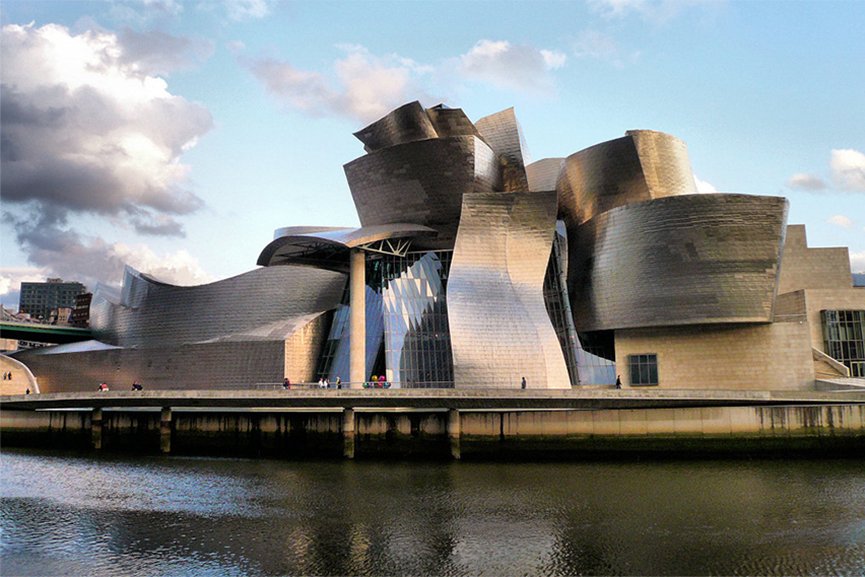
One of the prime examples of Deconstructivism, the Guggenheim Museum in Bilbao represents a fusion of complex, swirling forms and captivating materiality.
Neville Brody experimented with typographic design in his magazine Fuse. He invited designers to address social issues his magazine through the application of experimental typefaces, thereby encouraging and inspiring them to push the limits of the definition of typography.

References
https://medium.com › research-deconstruction-in-graphic-design-6180ec2f…
https://www.widewalls.ch › deconstructivism-buildings
 Visual Communication